









By Williams Danjuma, Gombe
A two-day workshop on the validation of the revised Gombe State Social Protection Policy (2027-2030) has ended with a set target of reducing poverty by 15% in the year 2030.
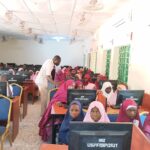
The meeting, called by the Gombe State Ministry of Budget and Economic Planning, in collaboration with the United Nations Children Fund (UNICEF), took place Wednesday 2nd and Thursday 3rd September, 2026, also reviewed the State’s Costed Implementation Plan and Comprehensive Monitoring, Evaluation, Accountability and Learning Plan as one coherent policy.
Participants at the meeting included officials from line ministries, Departments and agencies as well as CSO’s and some stakeholders. The State Commissioner for the newly created Ministry of Humanitarian Affairs, Hajiya Aishatu Ahmed, also featured prominently during the workshop.
The Gombe State Commissioner for Budget and Economic Planning, Micah Sunday Hamman, described the workshop as a critical step in creating a comprehensive, inclusive and responsive social protection system for the State.
He revealed that 86.2% of the State’s population are living in multidimensional poverty, particularly affecting children, women, and persons with disabilities and added that, “emerging risks such as inflation, unemployment, and climate-related shocks are increasing vulnerability among households”.
According to him, “The Reviewed Social Protection Policy aims to address these challenges by establishing a system that ensures a minimum standard of living, promotes human capital, strengthens resilience, and protects the dignity of all residents targeting at least a 15% reduction in poverty by 2030.
“The review of the previous policy cycle showed that, despite budgetary commitments, implementation was uneven due to weaknesses in coordination and service delivery”, the Commissioner pointed out.
He maintained that the policy also aims to enhance social assistance, insurance, labour market interventions, and social justice while focusing on evidence-based decision-making.
“It emphasizes that social protection should provide not just immediate relief, but also build resilience, improve livelihoods, and help households escape poverty”, he insisted.
UNICEF’s Social Policy Specialist, Yusuf Auta (PhD), highlighted the common understandings and practical steps while reviewing standards and expected products.
Ali Madina Dankumo (PhD), is a consultant with UNICEF and also a lecturer in the Department of Economics and Development Studies, Federal University of Kashere.
He presented a paper that centered on why the social protection policy is very important for Gombe State, while presenting imperical data.
In the paper, he highlighted governance and coordination, data, targeting and GSPIMS, financing and resource mobilization, monitoring, accountability and learning, critical implementation priorities as sure pathways of achieving success of the policy.
He concluded that, the Gombe State Social Protection Policy 2027-2030, provides a broad framework for coordinated poverty reduction, resilience, human capital development and social justice.
“Its success will depend on political commitment, sustainable financing, strong institutions, accurate targeting, effective delivery and rigorous monitoring and accountability”, Dr Madina maintained.







Leave a comment