





By Ali Abare
Security is one area where the administration of Governor Abdullahi Sule has truly excelled. Though no government can fully control security, Nasarawa State has enjoyed relative peace for seven years running, making it arguably the most peaceful state in North Central Nigeria, if not the country.
Much of this credit goes to Governor Sule’s personal disposition towards peace. Coming from the organised private sector, he understood early that peace is the foundation for investment and industrialisation, two cardinal objectives of his administration.
Since he took office on May 29, 2019, security has remained a top priority of his government.
The situation Nasarawa found itself in before 2019, with communities under one form of attack or another, is largely a thing of the past. This did not happen by chance. It came through deliberate collaboration with the military and police, sustained engagement with neighbouring states, constant dialogue with communities in conflict, and steady investment in the tools security agencies need to work.
One of the earliest and boldest interventions was the establishment of military super camps. Governor Sule visited Benue State to resolve border crises and met repeatedly with leaders of the Fulani, Tiv, Alago and other ethnic groups, as well as with security agencies.
This led to approval for the establishment of Military Super Camps at Kenyehu and Udege in Toto and Nasarawa Local Government Areas, aimed at reducing the activities of criminal elements in the state.
The state government also increased the number of security personnel deployed to highways and major towns, hosted a North Central Zone security summit in Lafia, and secured the establishment of a Mobile Police Training School in Nasarawa Eggon, along with an additional Police Mobile Force squadron in Toto.
Building on this, the Federal Government approved the construction of the Special Forces Command Headquarters in Doma, which was flagged off in June 2020. At the flag-off, Governor Sule thanked President Muhammadu Buhari for approving the two super camps, as well as for establishing the Mobile Police Training School in Nasarawa Eggon and siting an Airforce Command Base at the Lafia Cargo Airport for air surveillance across the North-Central zone.
The Federal Government also set up other operations in the zone, including the Special Joint Military Operation codenamed Ayem Akpatuma, headquartered in Nasarawa State to serve the entire zone, and Operation Whirl Stroke, based in Makurdi, Benue State, to address farmer-herder conflict across the region. A 123 Special Force Battalion was also established in Doma.
The Mobile Police Training School in Endehu, Nasarawa Eggon Local Government Area, stands out as one of the most significant security infrastructure projects delivered under Governor Sule. The facility was commissioned on August 12, 2020, by the Minister of Police Affairs, Muhammad Dingyadi, representing President Buhari, and it became the third of its kind in the country.
Governor Sule explained that the site was strategically chosen because the Endehu hills, once notorious for accidents, kidnapping and armed robbery, needed to be reclaimed for security purposes. The state government, corporate bodies and traditional rulers, led by the Emir of Lafia, supported the completion of the project.
In August 2025, the Nigerian Army relocated its Special Forces School from Buni Yadi in Yobe State to Doma, to provide a more suitable environment for advanced training. Army Chief, Lt General Olufemi Oluyede, also commissioned the headquarters of the 4 Special Forces Command and a new Officers’ Mess at the event.
Hosting the Army chief in Lafia, Governor Sule commended the relocation and pledged full cooperation with all security agencies, noting the existing synergy between the Special Forces, Operation Whirl Stroke, 177 Battalion Keffi and the Nigeria Police.
Beyond fixed infrastructure, Governor Sule’s administration has consistently equipped security agencies with the vehicles, motorcycles and other tools they need to move fast and cover ground.
Over the years, the government has procured and handed over well over a hundred operational vehicles, ranging from Hilux pickups and land cruisers to buses and saloon cars, to the police, army, Department of State Services, Air Force, Civil Defence Corps, Federal Road Safety Corps and other agencies.
In November 2024 alone, the governor distributed 41 assorted vehicles and 25 motorcycles to security operatives, on top of an earlier batch of 40 vehicles that included power bikes and Bajaj motorcycles meant to help officers reach hinterlands and difficult terrain in the fight against crime.
Traditional rulers, who work closely with security agencies at the grassroots, have also received vehicles to support their role in intelligence gathering and conflict prevention, with Governor Sule repeatedly stating that procuring operational vehicles for security agents has, over time, improved their success in fighting crime and contributed to the relative peace the state enjoys today.
The administration has also invested in local security structures. The Nasarawa Youths Empowerment Agency, strengthened under Governor Sule, has been deployed to secure flashpoints such as the Lafia flyover and underpass, while a Community Policing Advisory Council of volunteer guards complements the work of conventional security agencies.
In 2024, following concerns that some ethnic groups were forming vigilante outfits along tribal lines, Governor Sule banned the Kungiyar Zaman Lafiya Fulani vigilante group, the Bassa Vigilante and the Eggon Vigilante Group, showing that his commitment to peace applies evenly to all groups.
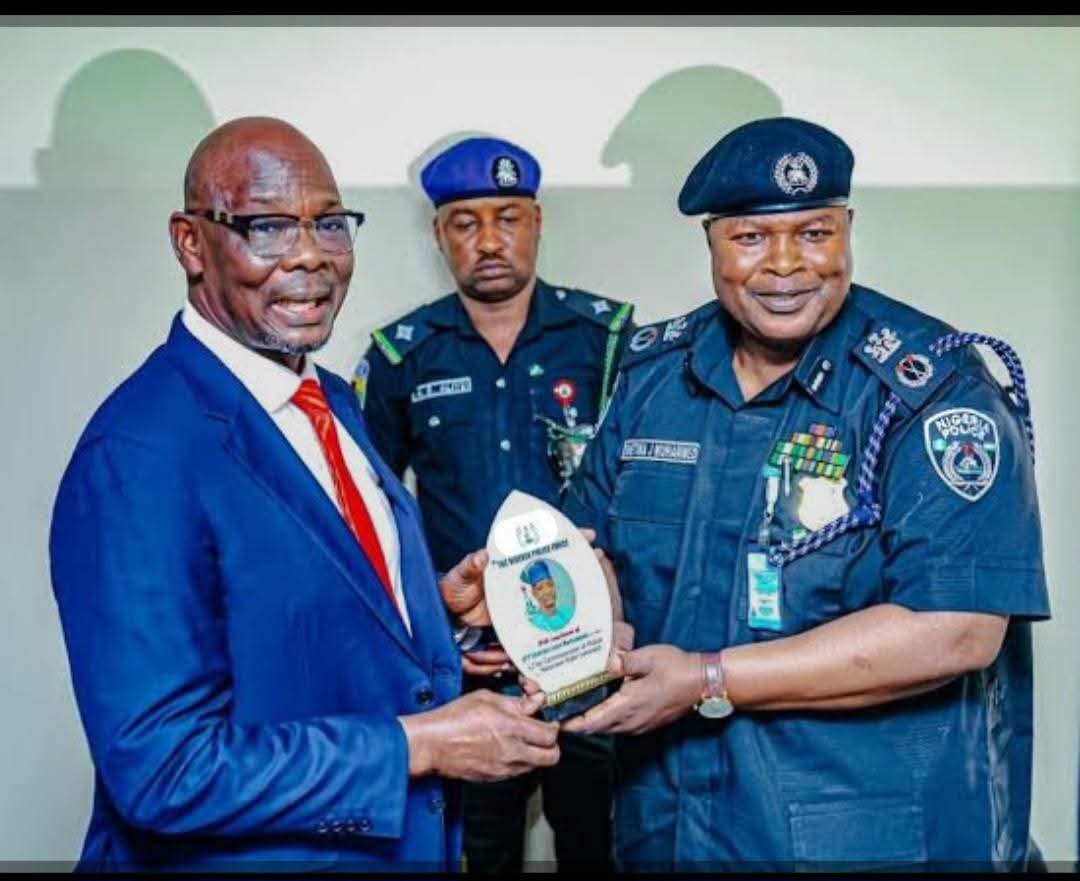
Governor Sule has also kept a close, direct relationship with the police high command in the state. In the wake of the 2026 primary elections, he visited the Nasarawa State Police Command Headquarters in Lafia to meet with senior police officers from across the state, where he charged them to remain neutral and professional in the discharge of their duties.
He assured the officers he would never direct them to manipulate any electoral process, while warning against victimisation of any political party, and announced plans to further boost logistical support to the police command on the back of improved state revenues.
During the build-up to the APC governorship primary, the governor equally urged security agencies to remain professional and neutral before, during and after the exercise, warning politicians and youths alike against any act capable of disrupting the peace of the state.
Perhaps the most remarkable achievement of the administration in this area is the reunification of the Bassa and Egbura communities in Toto Local Government Area, after decades of internecine conflict.
The two groups had clashed violently in 2018 and 2019, forcing the Bassa people out of more than 100 villages for seven years. Through sustained peace meetings organised by the state government and heads of security agencies, the disagreement was finally resolved, paving the way for the return of over 200,000 displaced Bassa indigenes to their ancestral homes beginning February 10, 2025.
Governor Sule authorised the Commanding Officer of the 177 Guards Battalion in Keffi, alongside the Toto Local Government Chairman, to oversee the safe return of the people.
On the Nasarawa-Benue border, deadly clashes had for years disrupted farming communities. Governor Sule engaged directly, hosting peace meetings with Benue’s leadership and pushing for the resumption of boundary demarcation between the two states.
When the Yelewata killings rocked Benue State in June 2025, President Bola Tinubu convened a peace meeting in Makurdi that Governor Sule attended alongside other North Central governors, with the President specifically calling for synergy between the two states.
As chairman of the North-Central Governors Forum, Sule went further, convening a meeting of all the region’s governors, including Benue’s Governor Hyacinth Alia, to jointly tackle insecurity threatening the zone.
Even with these achievements, Governor Sule has not claimed victory over insecurity. Kidnapping, communal disputes and farmer-herder tension remain challenges the administration continues to confront.
In September 2025, following attacks that displaced residents in Keana and Kadarko, the governor convened an expanded security meeting and directed traditional rulers to profile new residents in their communities. Plans are also underway to establish surveillance bases equipped with modern technology across the three senatorial zones of the state.
What stands out, though, is the consistency. From military super camps to the Doma Special Forces Command, from the Endehu police training school to fleets of patrol vehicles, and from the Bassa-Egbura reunification to border diplomacy with Benue, Governor Sule has treated security not as a side issue but as the very foundation on which every other achievement of his administration rests.
For a state once known for communal bloodletting, that foundation has held for seven years and counting. And the results of these deliberate policy thrust are visible for all to see, in the relative peace existing across the state, in the confidence by private investors trooping into Nasarawa State, leading to the recent commissioning of the largest lithium mining and processing plant in Africa, the 250m dollars Diamond New Energy plant in Endo, Nasarawa Local Government.
It is worthy of note that in the not too distant past, the entire area surrounding Endo community was a no go area, mostly as a result of the activities of criminal elements but due mostly to the unrelenting efforts of the Governor Sule administration, Endo and surrounding communities have been reclaimed to the benefits of not only Nasarawa State but the country at large.
As a result of this abiding peace and security, Lafia, the Nasarawa State capital and even metropolis like Karu, Keffi and Akwanga, have continued to witness influx of people and businesses, with the state capital now the centre for hosting regional and national events essentially because of the relative peace being enjoyed in the state.



Leave a comment