








By Odeh Godwin Onuh
In the warm hall of the Sultan Maccido Institute on March 11, Sokoto’s “resident communities” saw a promise kept in real time: Igbo traders, Yoruba artisans, Edo, Agatu-Idoma, Ebira Okene, Borno families and others lined up and walked away with ten 25 kg bags of rice each, plus cash gifts from the state. The symbolism was unmistakable—and so was the organizer.
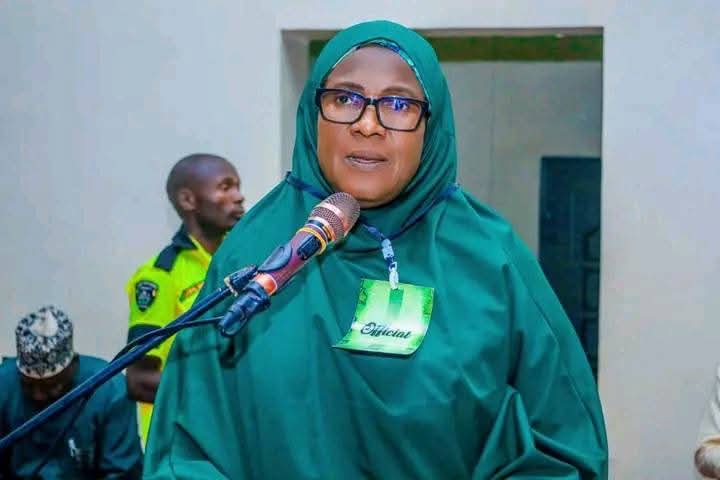
Governor Ahmad Aliyu Sokoto, PhD, FCNA was represented by Secretary to the State Government Hon. Muhammad Bello Sifawa, who reaffirmed what has become a through-line from Senator Aliyu Magatakarda Wamakko’s era to today: Sokoto does not discriminate by tribe or faith. He urged residents to remain law-abiding and peaceful so all may share the good of the land. But attendees say the night’s applause bent toward Hajiya Maryam Suleiman DMAAS, the Special Adviser on Resident Community and Internally Displaced Persons.
Appointed in 2023 after Aliyu’s APC inauguration, Suleiman—a Benue-born Idoma woman—has built a reputation for showing up where it counts: IDP camps, Ramadan food distributions, Christmas gift drives, and girl-child education campaigns. Tuesday’s event, supporters say, distilled her method—a competence-first brand of inclusion. She coordinated the program, called each group, handed over rice and envelopes, and left a quiet audit trail that was hard to spin: same gift, no filter for faith.
“Inclusion is too serious to be left to slogans,” one community elder remarked as envelopes changed hands. In Sokoto, where politics is often shorthand for religious and ethnic balances, the state’s ability to translate Wamakko-era neutrality into Aliyu-era delivery may shape how “resident” actually feels for minorities.
The Ministry’s outreach is not new—Suleiman has spent three years pushing welfare for displaced persons and women’s empowerment—but the turnout and order on March 11 read like a public test passed. Dr. Godwin Onuh Odeh, public affairs analyst at Sokoto State University, put it plainly: _“No power in history can withstand the force unity evokes.”_ This week, unity bore receipts: names logged, bags counted, cash paid, photographs taken.
For Aliyu’s administration—inaugurated May 29, 2023 on a competence-and-continuity pitch—the meeting was more than hospitality politics. It was an exhibit: gender inclusion, minority assurance, and service delivery in one hall, with Suleiman as the exhibit label. In a state where “detribalised” governance is both PR and policy, Tuesday’s line of Igbos, Yorubas, Edos, Idomas, Ebiras and Borno indigenes made the case the governor’s office keeps quoting—belonging, delivered.






Leave a comment